

Kitchen Line Clogs Every Quarter: Tracing Grease Caps and Hidden Horizontal Runs
A kitchen drain that clogs every few months doesn’t act randomly. The line tells a story: hot oils cool, starches swell, soap and food particles stick, and a flat or long horizontal run gives that mess a perfect place to settle. A quick cable clears a hole through the plug, and life goes back to normal… for a while. The cycle returns because the root cause stays in the pipe. Let’s break that cycle by tracking how grease caps form, how hidden runs trap waste, and how a clear plan stops repeat clogs in Tomball and across the Northwest Houston area.
Why Grease Caps Keep Coming Back
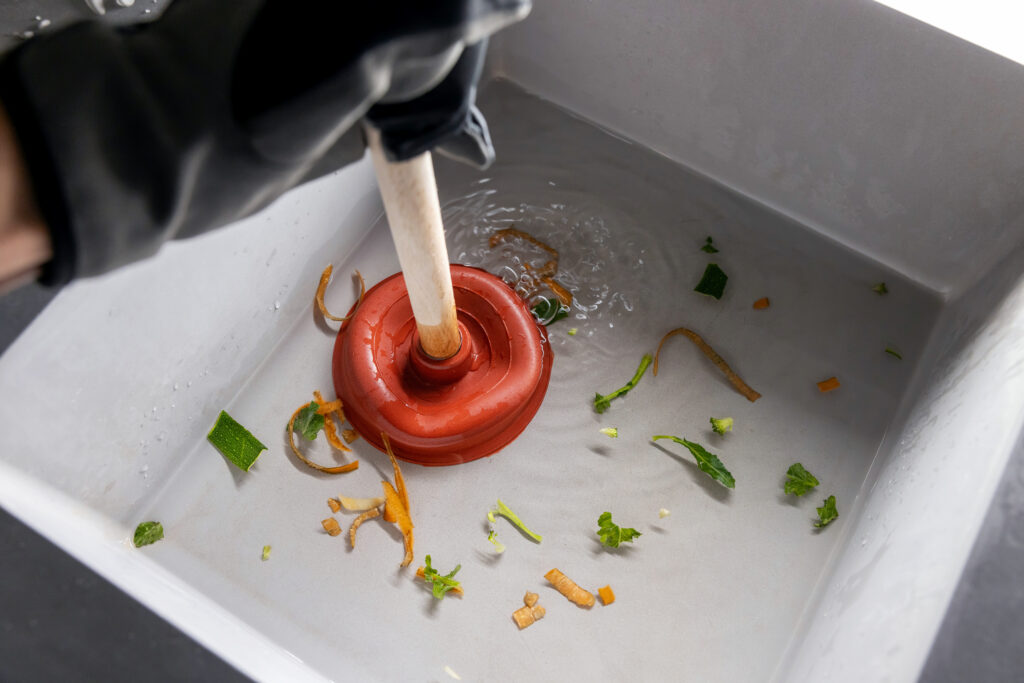
Hot cooking oil flows fine at the sink. It cools inside the line and turns waxy. That waxy film grabs crumbs, rice, pasta, and coffee grounds. Dish soap lifts fats but also lets them travel deeper before they stick. A garbage disposal chops food into small bits that glue into the film like gravel in tar. Over weeks, the film thickens into a “cap” that narrows the pipe. A cable can punch a hole through it, yet the slick layer stays on the wall and starts collecting again. Hydro jetting strips that film, which is why a good jet leaves the bore clean instead of just open.
The Hidden Horizontal Run Problem
Many kitchens sit far from the main stack. Builders often run a long, nearly flat horizontal pipe under the slab or along a joist bay to reach the main. That run may include several hard turns and one or two low spots. Grease and starch love those flats and dips. Water slows, solids linger, and air can’t move well. The line clogs in the same season, quarter after quarter. Snaking from the sink trap can miss the worst section because the cable hugs the closest turn and chews a soft tunnel without touching the cap on the far side. The fix starts with a map, not a machine.
Map the Route Before You Clean
Pros don’t guess; they trace. Here’s the playbook that catches the true choke point:
- Locate cleanouts. Check outside walls, cabinets, and the garage. A proper cleanout lets a camera reach the problem area.
- Run a camera. Video shows where water sits, where the cap starts, and how far it extends. You can watch the lens dive into pooled water or stop on a thick grease shelf.
- Use a locator. Track the camera head at the surface and mark depth and footage. Now you know the exact spot under the floor or behind the wall.
- Test flow by fixture. Dump a full sink, then run the dishwasher. Watch how fast water enters the capped section. Dye helps you confirm the branch.
- Note pipe material. PVC, cast iron, and old clay each call for different tools and pressures.
A 20-minute survey turns a recurring mystery into a measured plan.
Pick the Right Method: Cable, Jet, or Descale
Method matters more than muscle. Match the tool to the pipe and the problem.
- Cable snaking shines on tight, local plugs near the trap or first turn. Use the right head and slow feed to break the clog without gouging PVC. Expect fast relief, not a long-term reset.
- Hydro jetting wins against grease films, starch layers, and soft buildup in long kitchen runs. A pro sets pressure and picks a nozzle that scours the wall and rinses debris to the main. A follow-up camera pass confirms a clean, round bore.
- Descaling fits cast iron that has built up thick mineral flakes. A controlled rotary head knocks brittle scale down; a jet rinse carries the flakes away and smooths the surface so grease has less to grab.
Teams in our region often see a hybrid: descaling a short cast-iron section near the stack, then jetting the long PVC run from the kitchen.
Fix Layout Issues That Invite Clogs
Cleaning buys time; layout fixes buy years. After you see the route, consider these upgrades:
- Add or move a cleanout. A cleanout in the right spot lets future cleaning reach the trouble section directly.
- Shorten the horizontal run. Reroute a long path to a nearer stack when remodel plans open walls or floors.
- Correct slope and bellies. A sag (belly) holds water and invites grease. Spot repair or replacement resets the grade and stops pooling.
- Upsize a short section. Bumping a short, flat segment from 2″ to 3″ can improve carry and reduce film thickness.
- Isolate the disposal. In some layouts, a short dedicated tie-in with proper slope keeps ground food out of a long, grease-prone branch.
A camera and locator mark the exact feet that deserve attention, so you avoid tearing up good pipe.
Habits That Actually Help
Small changes cut grease caps down to size:
- Catch and trash fats. Wipe pans with a paper towel and scrape plates before washing. Pour cooled grease into a can, not the sink.
- Use strainers. Stop pasta bits, peels, and grounds at the surface.
- Run plenty of water. Push food and soap through the horizontal run; don’t dribble.
- Space heavy loads. Stagger dishwasher cycles and large sink dumps to avoid flooding a flat section.
- Schedule maintenance. Set a light jet polish before peak cooking seasons so a film never gets a foothold.
These steps protect any layout, even a long one.
Signs You’re Dealing with a Grease Cap, Not a Random Clog
- The sink drains well for weeks after service, then slows again on the same timeline.
- Hot water helps for a day, then the slowdown returns.
- The disposal sounds normal, yet you smell a sour, fatty odor at the sink base.
- A camera shows a shelf of residue along the bottom half of the pipe, not a single plug.
- The slowest point sits far from the sink, often near the last turn before the main.
That pattern points to film, not a lost spoon.
Why Chemical Openers Make Things Worse
Liquid openers can sit in low spots and eat at gaskets, traps, and finishes. They won’t dissolve a hardened grease cap or a starch layer glued to the wall. They can also blind technicians who need to jet or cable the line. Choose mechanical cleaning and proper rinsing instead. You protect your home and the people who work on it.
FAQs: Kitchen Line Clogs in Tomball & Northwest Houston
1) Why does my kitchen drain clog every three to four months?
Recurring clogs point to a grease film in a long or flat horizontal run. Food bits stick to that film until a plug forms again. A camera confirms it.
2) Will snaking from the sink fix it long term?
A cable clears a hole and buys time. The film stays on the wall, so the buildup returns. Hydro jetting strips the film and lasts longer.
3) Can hydro jetting harm PVC or cast iron?
A trained tech uses the right pressure and nozzle for each material. The process scours residue without chewing the pipe when done correctly.
4) Do enzymes or hot water solve grease caps?
Enzymes and hot water help as support. They don’t remove a mature cap. Use them after a proper jet to slow new film growth.
5) How do you find the hidden horizontal run under a slab?
A sewer camera shows the route and the exact choke point. A locator marks depth and distance at the surface, so the crew targets the right section in Tomball and the wider Northwest Houston area.
Stop the quarterly clog cycle with a plan that cleans, maps, and fixes the real cause. Call 281.351.4422 for kitchen drain experts serving Tomball and the entire Northwest Houston area.