

Hydraulic “Bellies” in Sewers: Causes, Consequences, and Correction Options
Sewer lines should slope in one steady direction so wastewater flows by gravity. A “belly” breaks that rule. The pipe sags, creates a low spot, and holds water and debris. Sludge settles in the dip, air can’t move well, and clogs keep coming back. Many homes never see the belly itself; they notice slow fixtures, gurgles, or backups that seem to return after every quick clear. This guide explains why bellies form, what they do to a drain system, how pros find them, and which repairs actually work. The focus stays practical for homes across Tomball and the Northwest Houston area, where clay soils shift with drought-and-rain cycles and mature roots hunt for moisture.
What a Sewer Belly Looks Like (and Why It Matters)
A healthy line carries a uniform slope from the house to the connection. A belly dips below that slope and forms a shallow trough. Water pools in the trough after every flush or drain cycle. Solids slow down, settle, and stick. Over time, the low spot grows slimy and rough, which traps even more debris. That cycle creates repeat blockages and odors. The dip also interrupts airflow in the system, so you hear gurgling in the tubs and toilets. Left alone, a belly stresses joints and can speed up wear on older pipe materials.
Common Causes in Our Region
Soils and site conditions in Tomball and the wider Northwest Houston area set up the perfect storm for sags. Here’s what drives the problem most often:
- Soil movement from drought shrink-swell cycles in local clay pushes sections of pipe out of line.
- Poor bedding or backfill during original installation lets the pipe settle after heavy rains.
- Heavy surface loads from trucks, dumpsters, or patio slabs add pressure above shallow laterals.
- Root pressure near joints nudges sections apart and creates a dip next to the intrusion.
- Improper slope set during construction leaves a section too flat; the pipe then bows over time.
- Repairs without regrading fix a break but skip proper compaction, which later settles.
These factors often stack together. A line that starts almost flat can’t tolerate much soil movement before a belly forms.
Day-to-Day Consequences You’ll Notice
Belly problems show up in everyday routines before they show up on camera. Watch for these patterns:
- Slow drains across multiple fixtures that clear for a week after a basic snake, then bog down again.
- Gurgling or burping as trapped air fights through pooled water.
- Odors near floor drains or low fixtures after storms or big laundry days.
- Frequent mainline backups even with careful use of the system.
- Lush patches or soggy soil above the route if the sag also leaks at a joint.
Short dips create mild symptoms at first; long or deep dips trigger repeat emergencies. Either way, cleaning alone won’t fix the underlying slope problem.
How Pros Confirm a Belly
Guesswork wastes time and money. A clean diagnostic steps through:
- Access and camera survey from a proper cleanout to view the entire run. Clear video shows standing water and the moment the lens dips under the pool.
- Depth and path mapping with a locator to mark the belly’s exact position and length at the surface.
- Material ID (PVC, cast iron, clay) to plan safe cleaning and repair.
- Fixture tests to see how the belly behaves under real flow.
- Evidence review with the homeowner so next steps stay clear and documented.
A post-repair camera pass proves the fix and sets a baseline for future checks.
What Helps (and What Doesn’t)
Plenty of quick clears open flow for a few days, then the belly wins again. Smart plans match the condition, the length of the dip, and the material.
Maintenance That Manages Symptoms
- Hydro jetting scours grease and sludge out of the low spot and restores full bore for a while.
- Targeted cabling breaks a local plug before a jet rinse.
- Enzyme or bio treatments support kitchens with frequent cooking; they don’t correct the slope.
Use this route for minor, short bellies or when you need time to plan a permanent repair. Schedule maintenance on a set interval so the dip never has a chance to build up again.
Repairs That Correct the Problem
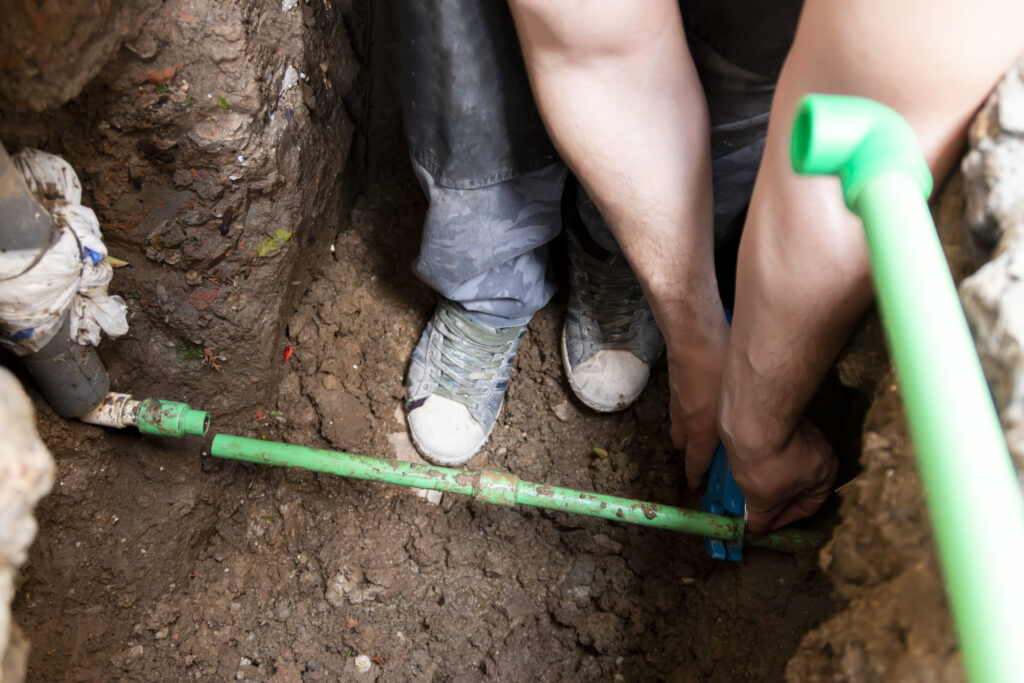
- Open-cut spot repair replaces the sagging section and resets proper grade with solid bedding and compaction. This option works well for bellies under lawns or softscape.
- Pipe bursting installs a new pipe along the old path by pulling it through while breaking the failed pipe outward. Bursting does not fix grade by itself; crews still correct elevation at entry/exit pits so the new line holds the right slope.
- Cured-in-place lining (CIPP) seals cracks and joints but does not remove a deep belly. A liner can bridge a very short, shallow dip, yet it won’t lift a long sag. Use lining as part of a plan when the belly is minimal and the main goal is sealing leaks.
Your plumber should explain these trade-offs on the video screen and show how each option applies to the exact footage of your pipe.
How to Keep a Fixed Line in Great Shape
Once a crew resets the slope, take a few simple steps to protect your investment:
- Divert the roof and surface water so the trench backfill stays stable.
- Limit heavy loads over the route; place dumpsters and heavy vehicles away from shallow lines.
- Plant smart and keep thirsty roots away from laterals.
- Add cleanouts at strategic points for faster future service.
- Schedule a camera check every year or two in high-use homes, or after major weather swings.
These habits support stable soil, clear access, and quick confirmation that the grade stays true.
FAQs: Sewer Bellies in Tomball & the Northwest Houston Area
1) What creates a sewer belly in this area?
Clay soils shrink in drought and swell in rain. That movement, combined with weak backfill or heavy surface loads, pushes a section down and forms a dip.
2) Will hydro jetting fix a belly for good?
Jetting cleans the low spot and restores flow. The dip remains. Use jetting as maintenance or as prep before a true repair that corrects the slope.
3) Can trenchless lining solve a deep sag?
A liner seals cracks and joints, but can’t raise the pipe. It may span a short, shallow dip. Deep or long bellies need grade correction or replacement.
4) How do you know the exact location of the belly?
A technician runs a sewer camera to spot standing water, then maps depth and position with a locator. Surface marks show where a repair should start and end.
5) What’s the fastest permanent option near a driveway or patio?
Pipe bursting often minimizes surface disruption. The crew still adjusts the entry and exit pit elevation so the new pipe holds the correct slope.
Talk to a local sewer specialist who knows Tomball soils and Northwest Houston layouts. Call 281.351.4422 for camera inspection, clear answers, and the right fix.