

Basement Floor Drain Keeps Backing Up: Mapping Branch Lines to Pinpoint the Restriction
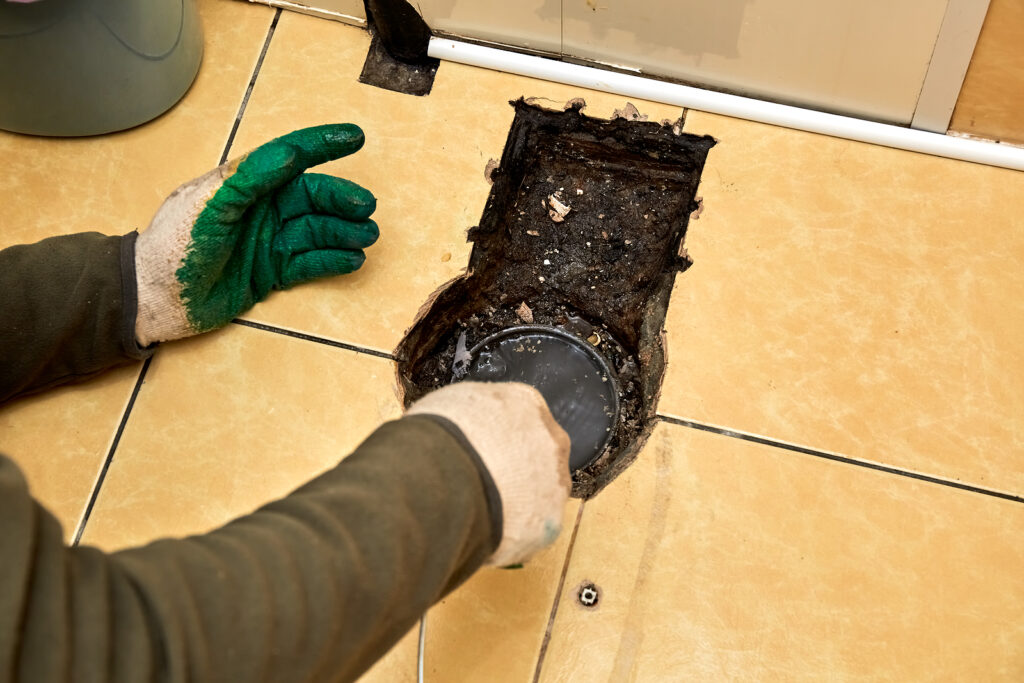
A floor drain that burps sewage or gray water turns any lower level into a mess. Many homeowners snake the line, see a short-term win, then watch the backup return. The real story often hides in the “tree” of pipes behind the walls. Each sink, tub, toilet, washer, and floor drain ties into a branch line, then feeds the main. One tight bend, a grease cap, a lint mat, a scale patch, a root tuft, or a shallow belly can choke that branch and push waste to the lowest outlet, the floor drain. Clear thinking and a simple map of your system solve the mystery. This guide shows how pros trace branch lines, test flow, and confirm the exact restriction so the fix sticks in Tomball and the entire Northwest Houston area.
Read the Clues Before Grabbing a Machine
Backups talk. Listen and note patterns:
- The floor drain backs up during the washer’s spin cycle.
- Showers upstairs drain slowly and gurgle near the end.
- A kitchen sink dump sends water to the floor drain within seconds.
- Toilets flush fine, yet laundry day triggers overflow.
- Rainy days make symptoms worse, while dry days seem calmer.
Those signals point to where the restriction lives. A laundry-triggered backup screams “shared branch near the standpipe.” A kitchen dump that echoes at the floor drain points to a tie-in between the kitchen and the lower-level branch. Gurgles during shower use hint at airflow issues or pooled water in a sagging section.
Build a Simple Map of Your Drain “Tree”
Every home has a layout you can sketch in minutes. Start with the lowest fixtures: the floor drain, laundry standpipe, utility sink, basement bath group, and any nearby cleanouts. Add the route of the main running to the street or septic. Mark upstairs stacks where tubs and toilets drop. Draw likely tie-ins: laundry to a nearby 2- or 3-inch branch, kitchen on its own line across the house, bath groups on vertical stacks, and all lines converging near the foundation exit. Even a rough map helps you test in the right order and spot the suspect section.
Run Smart Field Tests That Don’t Make a Mess
Pros verify the map with controlled tests:
- Flow test by fixture. Run the washer drain, then shut it off and watch the floor drain. Follow with a kitchen sink dump, then a shower, then a toilet. Note which action triggers the backup and how fast it appears.
- Dye test. Drop a small amount of safe tracer dye in the fixture you suspect. Watch the floor drain for color to confirm the path.
- Camera survey. Enter through a cleanout near the floor drain or laundry. Video shows standing water, lint mats, grease caps, offsets, scale, and roots.
- Locator mapping. Track the camera head at the surface. Mark depth and distance to create a real-world map of the branch and the exact problem spot.
- Vent check. Listen for strong gurgles and sniff for sewer gas. Smoke testing or a quick roof vent check confirms airflow and rules out vent-only issues.
These steps prevent guesswork and keep floors dry. A good survey also saves time later if a repair crew needs exact footage.
Match the Fix to the Pipe and the Problem
Method matters. Tools follow the evidence.
- Localized cable clearing. A compact plug near a trap or tie-in responds to the right cable and head. Techs feed slowly, break the blockage, and recover debris.
- Hydro jetting. Grease films and lint mats need water power. Calibrated jetting scrubs films from PVC and clay and washes the mess to the main. A polish pass after cable work prevents quick rebounds.
- Descaling. Old cast iron grows rough like sandpaper. A controlled descaling head knocks brittle scale down; a jet rinse carries flakes away and smooths the bore.
- Root removal. Sectional cutters open root balls, then jetting strips fibers so they don’t tangle again in a week. A camera pass rules out cracked joints that need more than cleaning.
- Belly correction. A camera that sinks underwater for a long stretch signals a sag. Maintenance keeps water moving for a while, but a lasting fix resets the grade with spot repair or replacement.
- Cleanout upgrades. New cleanouts at key points make future service faster and cleaner.
Teams in Tomball and Northwest Houston see mixed systems: newer PVC branches tied to older cast-iron or clay laterals. Pipe material drives safe tool choice every time.
Common Culprits Near Floor Drains
Homes feed many loads into a small area near the floor drain:
- Laundry lint + detergent gel. Standpipes collect fibers and soap residue that glue to elbows.
- Grease echoes. A long kitchen run sends fat and starch downstream. That film catches lint near the lower branch.
- Scale patches. Mid-century cast iron flakes and grabs paper or hair.
- Root tufts. Shallow laterals near landscaping invite fine roots that narrow the bore.
- Bellies. Clay soils in our region shrink and swell. Sags hold water and trap solids, then push that mix to the lowest outlet.
- Construction leftovers. Mortar chunks or drywall slurry harden in traps and tight bends after remodels.
A camera view turns guesswork into certainty and helps you pick the right fix.
Keep the Branch Clear After the Repair
Good habits and light maintenance keep backups away:
- Install a mesh lint filter on the washer discharge hose.
- Scrape plates and collect fats in a can; don’t melt grease with hot water.
- Catch hair in the shower drains with strainers and clean them often.
- Schedule a camera check after storm seasons or major drought swings.
- Ask for a maintenance interval that matches your usage and pipe type.
- Label cleanouts so future visits start fast and stay tidy.
Small steps protect floors, finishes, and peace of mind.
Safety Steps Before a Plumber Arrives
Quick actions reduce damage and protect your family:
- Stop laundry and dish cycles until the line clears.
- Move boxes, rugs, and furniture away from the floor drain area.
- Power your sump pump and check that the discharge runs free.
- Avoid chemical drain openers; they sit in the low spot and burn skin.
- Ventilate the space and disinfect after any overflow.
These moves give the technician a safer, cleaner workspace and speed the fix.
FAQs: Basement Floor Drain Backups in Tomball & Northwest Houston
1) Why does the floor drain back up during the washer’s spin?
The washer dumps high volumes fast. A clog or film in the shared branch can’t keep up, so water takes the path of least resistance and rises at the floor drain.
2) The toilet and sinks work fine. Does that rule out the main?
Not always. Many layouts send laundry and the floor drain to a different branch before they hit the main. A camera survey confirms which section holds the restriction.
3) Can hydro jetting solve this for good?
Jetting clears films and lint mats and often restores full flow. A belly, cracked joint, or heavy scale needs added steps like repair, lining, or descaling.
4) Basements are rare here. Does this apply to slab homes?
Yes. Garages, utility rooms, and sunken living areas use floor drains too. The same mapping and cleaning process applies to those low points.
5) How fast can a tech find the exact spot?
Teams map branches with a camera and locator in one focused visit, then show the footage and surface marks so the repair plan stays clear.
Talk to a local drain specialist who maps branches, proves the cause, and clears the line the right way. Call 281.351.4422 for expert help in Tomball and across the Northwest Houston area.